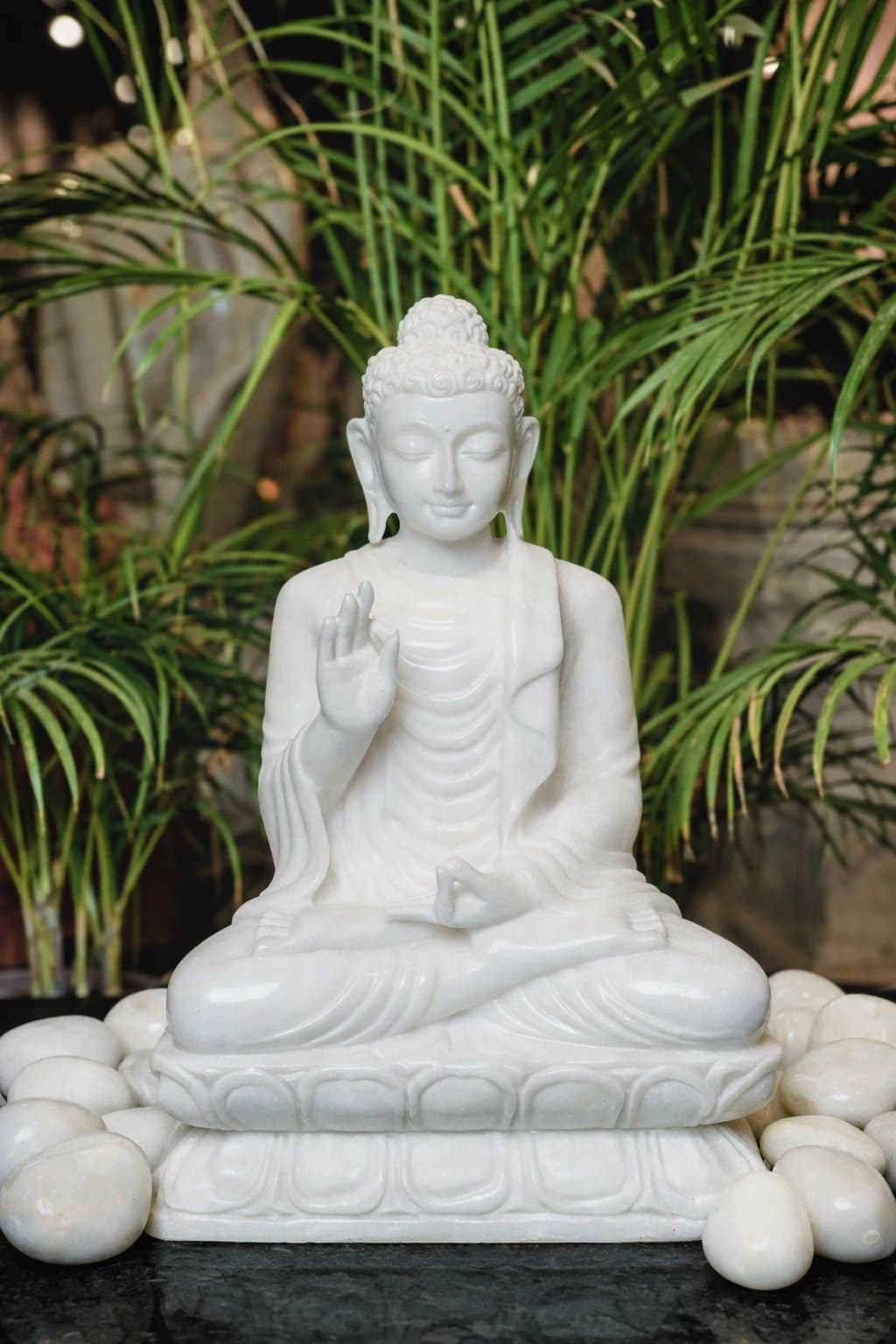


Every Buddha statue communicates through two things: the posture of the body — seated, standing, walking or reclining — and the mudra, the symbolic gesture of the hands. Together they tell a moment from the life of the Buddha and the quality the statue is meant to bring to a space.
This guide explains the poses you will meet most often, what each one signifies, and where each one tends to feel most at home.
Abhaya mudra — fearlessness and protection
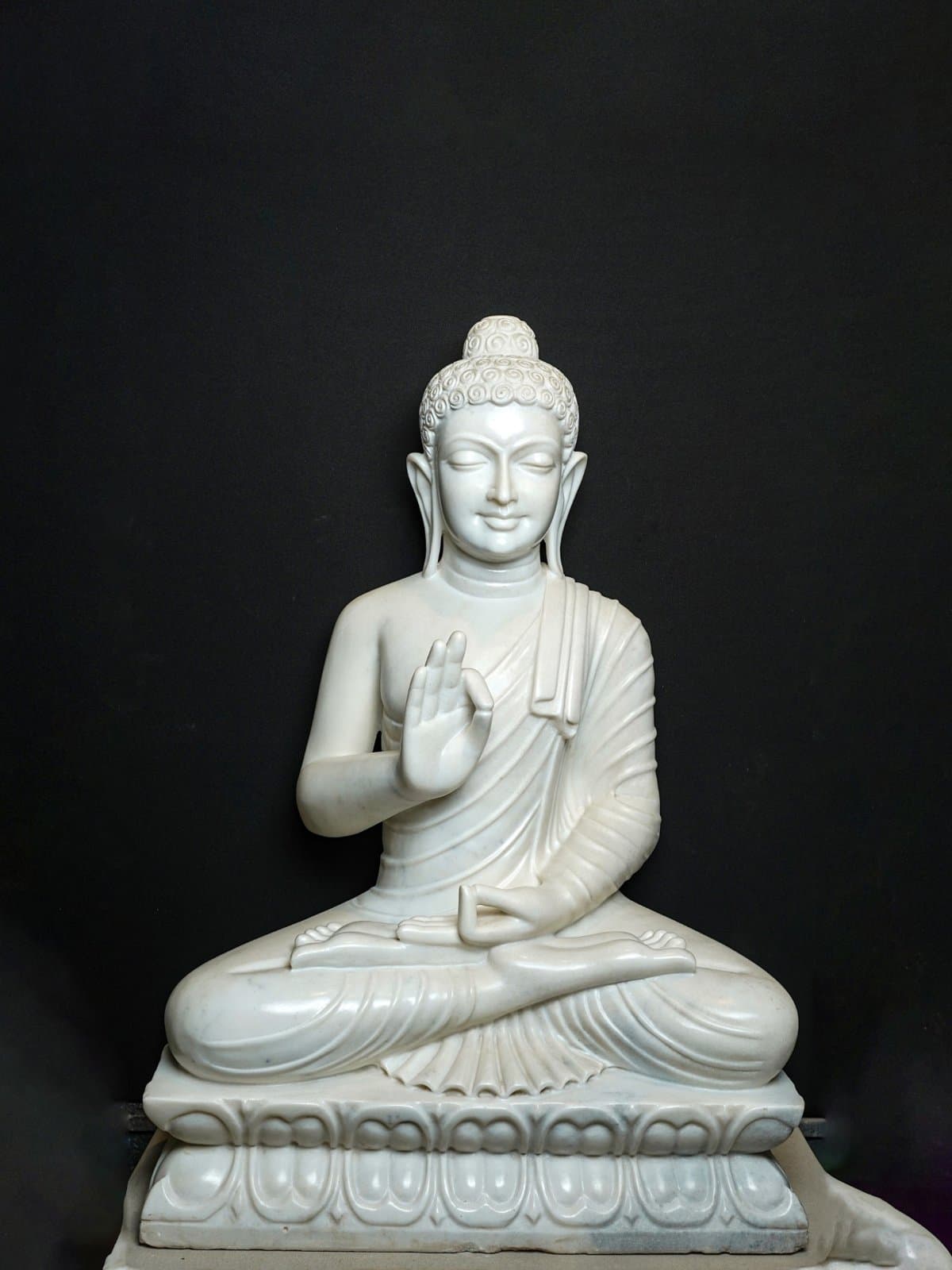
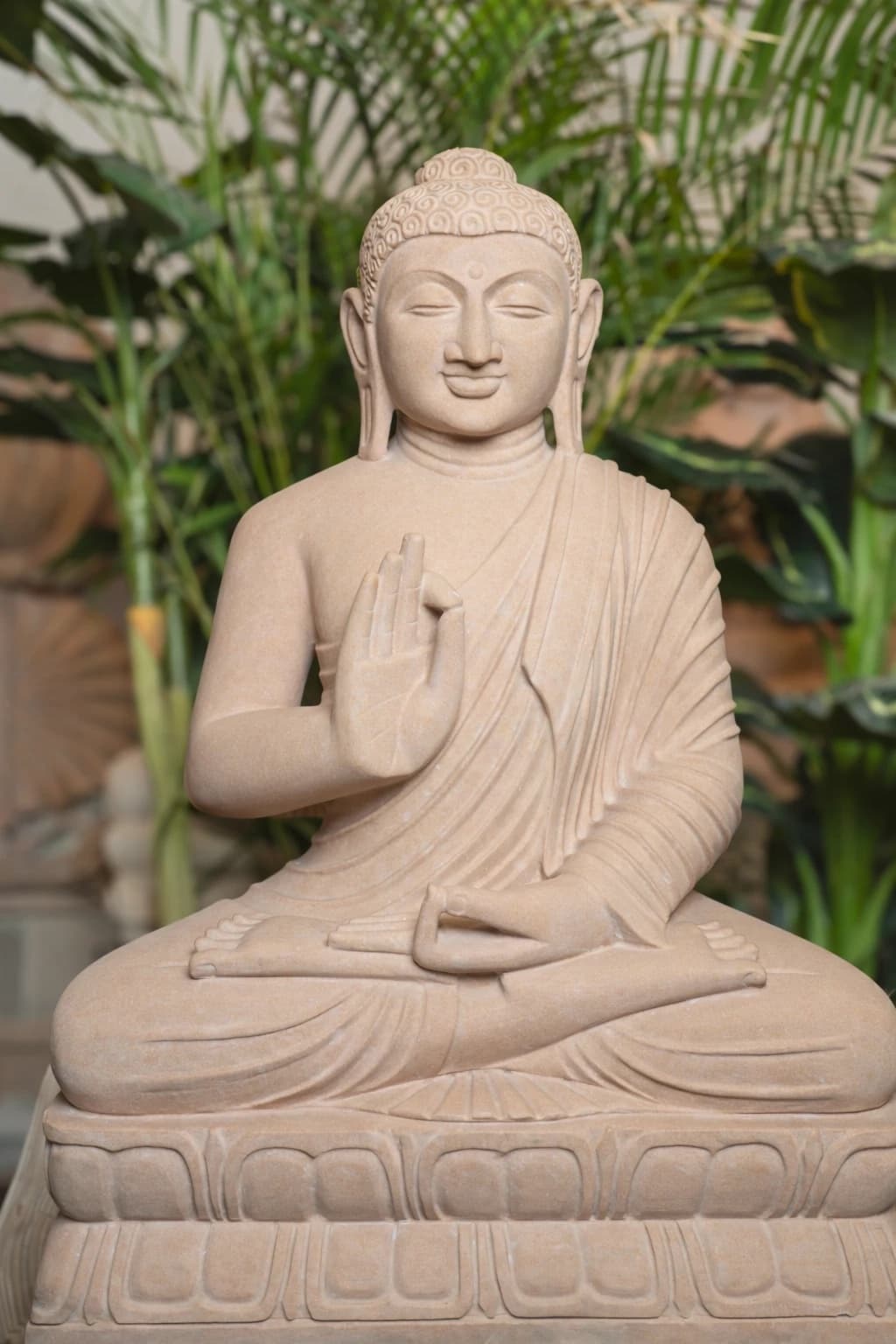
The right hand is raised to shoulder height with the palm facing outward; the left hand rests in the lap or hangs at the side. Abhaya means “without fear”. The gesture offers reassurance and protection, and is often associated with the Buddha calming danger through his presence alone.
Because it faces outward in welcome and protection, the Abhaya Buddha is a natural choice for an entrance, foyer or living room, facing the main door.

Dhyana mudra — meditation
Both hands rest in the lap, right hand over left, palms up, often with the thumbs lightly touching to form a triangle or oval. The eyes are lowered or closed. This is the gesture of deep meditation and concentration — the Buddha in the stillness that preceded enlightenment.
A meditating Buddha suits meditation rooms, yoga spaces, reading corners and gardens — anywhere you want to slow down. In the garden, the Northeast corner is the traditional place for it.
Looking for a meditating Buddha in a particular size or stone? Ask us for a custom quote →Bhumisparsha mudra — touching the earth
The Buddha sits cross-legged with the right hand reaching down over the right knee, fingertips touching the ground, while the left hand rests in the lap. It recalls the moment of enlightenment, when the Buddha called the earth to witness his resolve. It is one of the most widely depicted poses, especially in Thai and Tibetan art.
The earth-touching Buddha speaks of steadiness and determination — a fitting presence for a study, a workspace or a quiet corner of the garden.

Varada mudra — generosity and blessing
The right hand hangs downward with the palm open and facing out, as if offering something. Varada is the gesture of giving, compassion and the granting of wishes. It is often combined with Abhaya — one hand raised, the other lowered — in standing figures.
Varada suits living rooms and entrances, where the idea of welcome and abundance fits naturally.
Dharmachakra and Vitarka — teaching
In the Dharmachakra mudra both hands are held at the chest, the thumb and index finger of each hand forming circles that touch — the turning of the wheel of the Dharma at the Buddha’s first sermon. In the related Vitarka mudra, one hand is raised with the thumb and index finger joined in a circle, the gesture of discussion and teaching.
Seated Buddhas with the right hand raised and thumb and finger joined in Vitarka are often sold as “Blessing Buddhas”, because the raised hand reads as a gesture of blessing. Teaching poses suit living rooms, libraries and studies, where conversation, learning and clear thinking are encouraged.

Reclining Buddha — the final passing
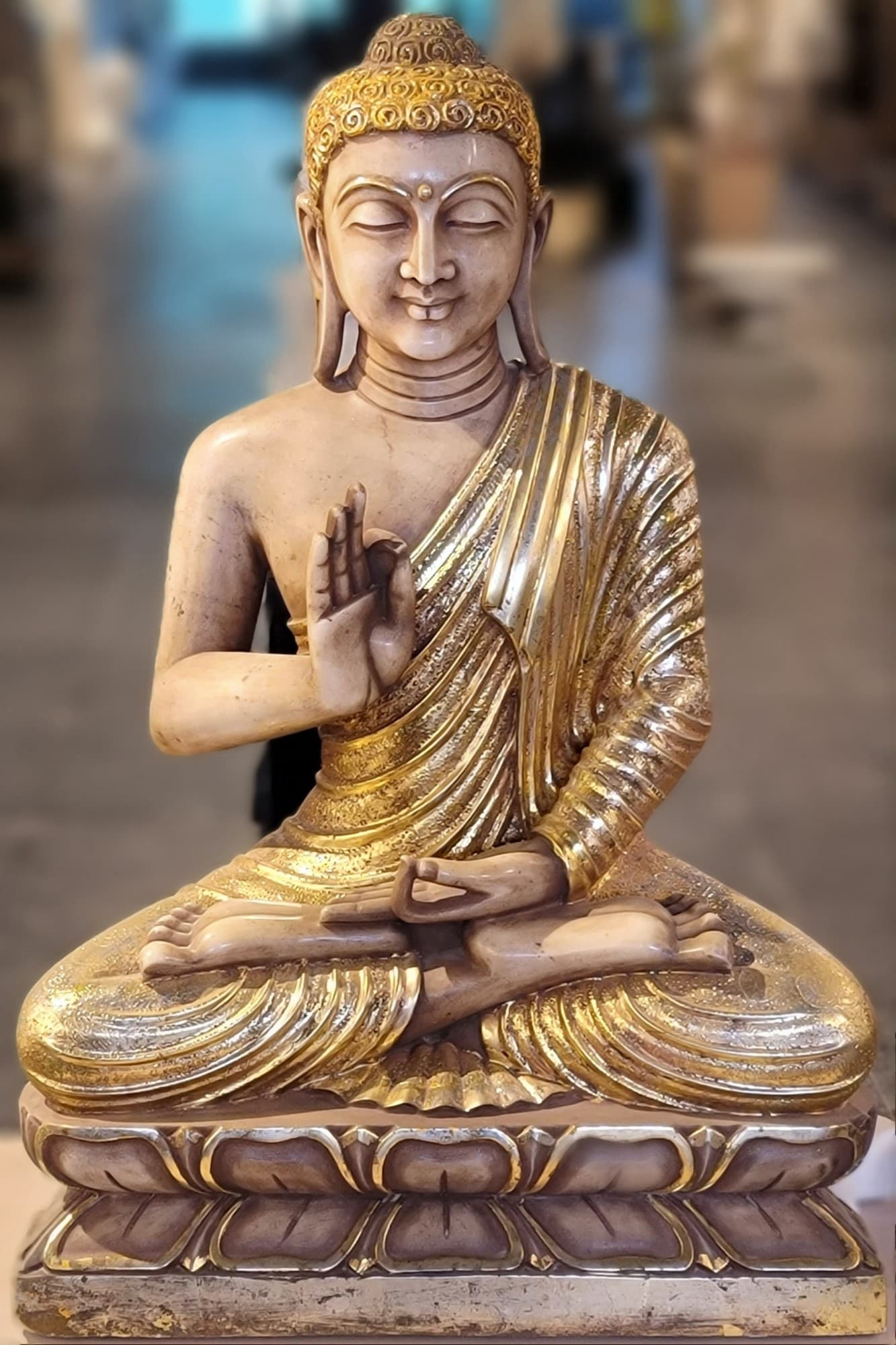
The Buddha lies on his right side, head resting on his right hand or a cushion. The reclining Buddha represents the parinirvana — the Buddha’s passing into final nirvana at the end of his life — and expresses peace and release rather than sleep.
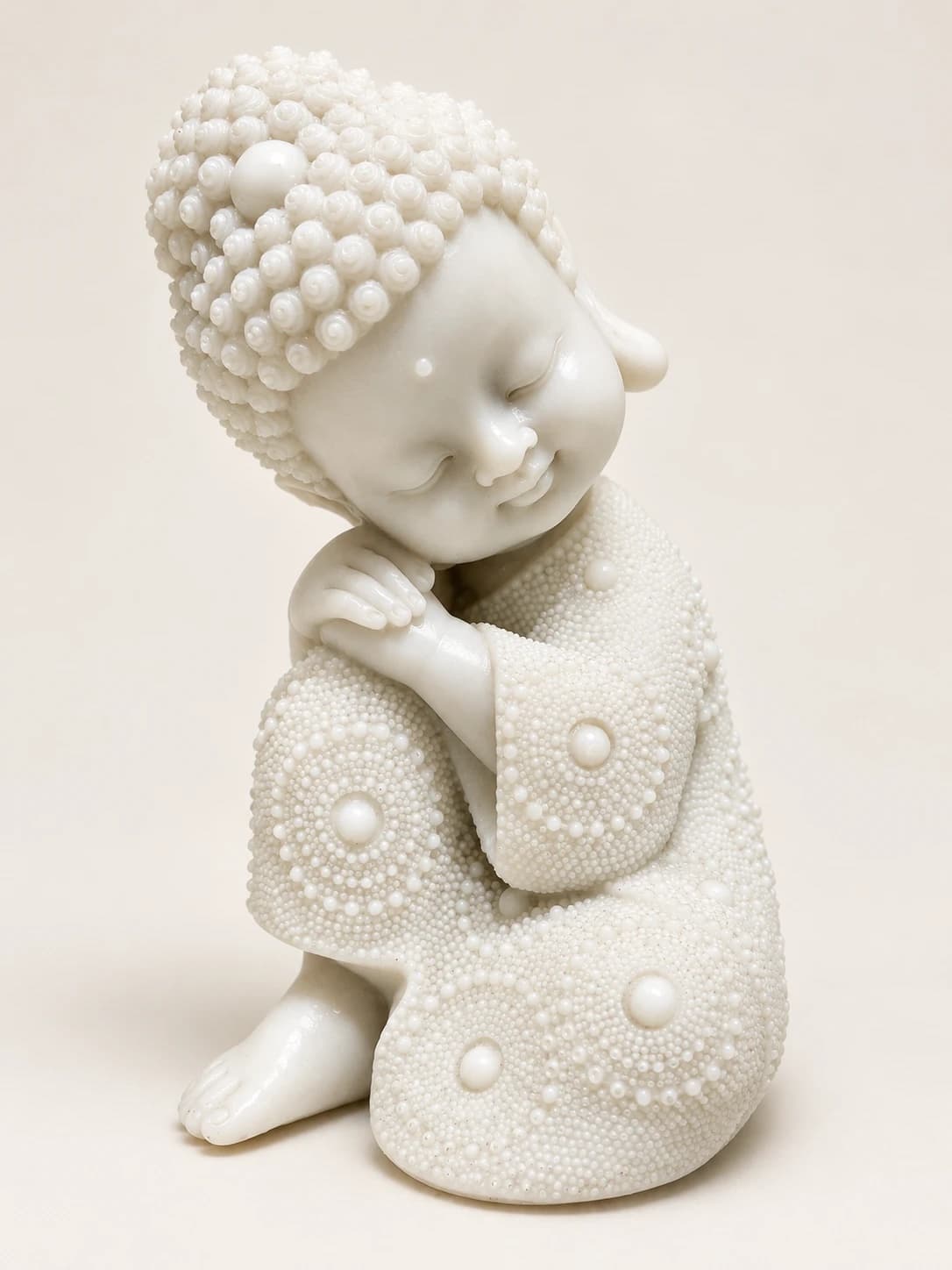
This is different from the playful sleeping or napping Buddha figures made for homes, which show a young monk or child Buddha at rest and are a gentle choice for bedrooms and nurseries.
Standing and walking Buddhas
A standing Buddha, often with one hand in Abhaya and one in Varada, conveys readiness and active compassion. The walking Buddha, with one heel lifted mid-step, is especially associated with Thai Sukhothai art and represents the Buddha returning to teach. Their upright, slender form works well in hallways and narrow spaces.
Buddha heads and busts
A Buddha head focuses entirely on the serene expression — closed or lowered eyes, elongated ears and the ushnisha, the rounded crown symbolising wisdom. Heads are a contemporary, sculptural way to bring the Buddha into a home and are often used in water features and gardens.


Laughing Buddha and the wise monks
The round, smiling Laughing Buddha is Budai, a Chinese folk figure associated with happiness and plenty — not the historical Buddha, Siddhartha Gautama, whom the poses above depict. The two are often confused because both are called Buddha in everyday speech.
The three wise monks — see no evil, hear no evil, speak no evil — are a popular motif encouraging right thought, speech and conduct, and are usually kept in a study, office or living room.

How to choose the right Buddha for your space
Start with the room. For an entrance or living room, a protective Abhaya Buddha or a Blessing Buddha (Vitarka) greets people as they arrive. For a meditation room, yoga space or garden, a meditating Dhyana Buddha brings stillness. For a study, an earth-touching or teaching Buddha suits concentration. For a bedroom or nursery, a restful sleeping figure is the gentle choice.
Then consider scale and stone. Tabletop statues of 12 inches or less suit shelves and altars; 18–24 inches holds a console or corner on its own; 30 inches and above makes a centrepiece for a foyer or garden. White marble feels luminous and calm, black marble grounded and dramatic, and sandstone warm and weathers beautifully outdoors. Marble dust gives the look of white marble at a lighter weight and lower price, and is best kept indoors or under cover.
Whatever you choose, place the Buddha raised off the floor, at or above eye level, in a clean space — and, by Vastu tradition, in the North or Northeast facing the entrance.
Read where to place a Buddha statue in our Vastu placement guide →Common questions
Which Buddha statue is best for the home?
It depends on the room. An Abhaya (protection) or Blessing (Vitarka) Buddha suits an entrance or living room, a meditating Dhyana Buddha suits a meditation room or garden, and a restful sleeping figure is the gentle choice for a bedroom.
What does the raised right hand on a Buddha statue mean?
A right hand raised with the palm facing outward is the Abhaya mudra, the gesture of fearlessness and protection.
What is the difference between a reclining Buddha and a sleeping Buddha?
The reclining Buddha represents the Buddha’s passing into final nirvana and expresses peace and release. Sleeping or napping Buddha figures made for homes show a young monk or child Buddha at rest.
Is the Laughing Buddha the same as the Buddha?
No. The Laughing Buddha is Budai, a Chinese folk figure of happiness and plenty. Classical Buddha statues depict the historical Buddha, Siddhartha Gautama.
Can I order a Buddha in a pose that isn’t listed?
Yes — custom sizes and designs are available on request. Contact us with the pose, size and stone you have in mind and we will send a quote.